
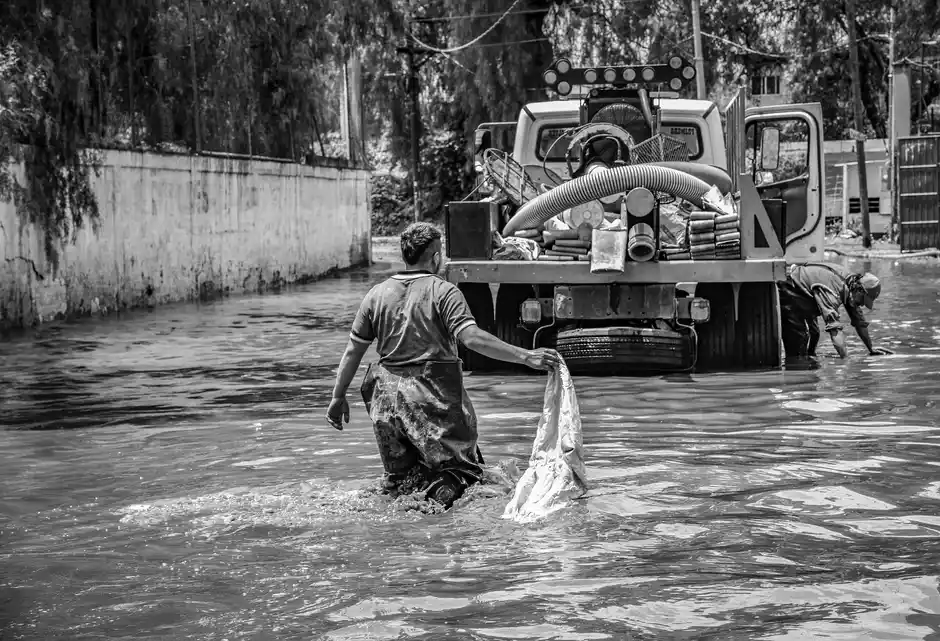
Moisture Inspection and Mapping
A technician uses a moisture meter, thermal imaging camera, and boroscope to find the water's edge and check inside wall cavities. You get a clear picture of what is wet and what is not before any equipment runs.
Every job starts with the same core scope: find the water, remove it, dry the structure, and document the result. Add-ons like mold remediation, sewage disinfection, or rebuild work are quoted separately once we see the space. Here is what is in the standard package.
A technician uses a moisture meter, thermal imaging camera, and boroscope to find the water's edge and check inside wall cavities. You get a clear picture of what is wet and what is not before any equipment runs.
Truck-mount or portable water extraction units pull standing water from concrete, carpet, and pad. We move 20 to 60 gallons per minute, so most basements are free of standing water within three to five hours.
After extraction, we apply antimicrobial solution to affected surfaces to stop mold and bacteria from taking hold. Sewage-contaminated water gets a stronger disinfectant protocol with full PPE and proper disposal.
Air movers, desiccant dehumidifiers, and an air scrubber with HEPA filter go in place to dry framing, drywall, and concrete. Equipment typically runs two to four days depending on saturation and ambient humidity.
We return each day to log moisture meter and hygrometer readings, reposition equipment, and confirm progress. When the structure hits dry standard, you receive a written report with photos and final readings.
Basement water removal is the process of pumping, extracting, and drying standing water and saturated materials from a below-grade space, then treating the area so mold and structural damage do not follow. It is not one machine and a shop vac. We start with a moisture meter and thermal imaging camera to map how far the water traveled, then run truck-mount and portable extraction units to pull water out of carpet, pad, and concrete. After that, air movers and dehumidifiers dry the framing, drywall, and baseboard until a hygrometer reads normal.
Idaho basements flood for predictable reasons: frozen pipes that split in January, snowmelt that finds foundation cracks in March, sump pump failure during a thunderstorm, and sewage backup after heavy rain. Homes in older Boise bench neighborhoods and rural properties around Garden Valley often have no vapor barrier and undersized sump pumps, so a single storm can put two inches of water across the floor. If you are searching for basement water removal near me Idaho, we cover the whole state and answer the phone 24/7.
Five steps, no surprises. Here is exactly how our basement water extraction company in Idaho handles your job from the first call to the final reading.
Schedule
Call or book online — a real human picks up and confirms a 2-hour arrival window.
Diagnose
Licensed tech inspects on-site, then walks you through the cause and your options.
Fix
The job is completed to code and done right the first time — no shortcuts, no surprises.
Guarantee
Every job backed by a written workmanship warranty — and we stand behind it.
Moisture Meter and Thermal Imaging Camera
Used together to find water hidden behind drywall and under flooring. The thermal camera shows temperature differences that reveal wet spots the eye cannot see.
Truck-Mount Water Extraction Unit
Our primary extraction tool. Moves 20 to 60 gallons per minute and pulls water out of carpet, pad, and concrete faster than any portable unit.
Dri-Eaz and Phoenix Air Movers
High-velocity fans that drive evaporation from wet surfaces. Positioned to create a circular airflow pattern that speeds drying by 40 to 60 percent over still air.
Desiccant Dehumidifier
Pulls moisture out of the air in cool, damp basements where refrigerant dehumidifiers lose efficiency. Essential for Idaho jobs in winter and early spring.
Air Scrubber with HEPA Filter
Filters airborne mold spores, dust, and debris during drying. Keeps the rest of the house from picking up contamination from the basement.
Hygrometer and Boroscope
The hygrometer tracks relative humidity and dew point; the boroscope lets us look inside wall cavities without cutting drywall. Both feed the daily drying log.
IICRC S500 Drying Standard
The industry standard for water damage restoration. It sets the drying goals, equipment calculations, and documentation requirements we follow on every basement job. Following it is what makes our drying report stand up to insurance review.
Category Classification
We classify water as category 1 (clean), 2 (gray), or 3 (black/sewage) before we start. Category determines PPE, disposal rules, and whether porous materials can be saved or must be removed.
Xactimate Scoping
We build the insurance scope in Xactimate, the same software most carriers use. Line items match what the adjuster expects, which cuts back-and-forth and gets your claim approved faster.
Antimicrobial Application
After extraction, we apply Fiberlock or Benefect antimicrobial solution to affected surfaces. This stops mold and bacteria from colonizing wet materials while drying is still in progress.
01
What we do: Call us before you touch anything. We shut off the water, extract the standing water, and dry the structure. If the pipe split, we coordinate the repair so the leak is fixed before drying finishes.
→ Water out the same day, structure dry in three to four days, and no mold growth in the wall cavity.
02
What we do: We pull the carpet and pad, extract water from the concrete, and set drying equipment. Thermal imaging finds the crack or drain tile failure feeding the seepage, and we give you a repair plan.
→ Dry concrete and framing, a documented source, and a fix that stops the annual spring wet basement.
03
What we do: We arrive with portable generators and extraction equipment, pump the water out, and dry the space. We inspect the sump pit and recommend a battery backup so the next outage does not repeat this.
→ Basement dry in three to five days, sump system upgraded, and no repeat flooding when the power goes out again.
04
What we do: We inspect with a moisture meter and thermal camera, document what is wet and what is not, and dry any affected areas. You get a written report showing the basement meets dry standard.
→ A clean report you can hand to the buyer's agent, and one less negotiation point on the sale.
Idaho basements fail in ways that are specific to the state's climate and housing stock. Winter cold snaps drive frost six feet deep in eastern Idaho, which splits supply lines and pushes water into basements in Idaho Falls and Blackfoot. Spring snowmelt in the mountains sends runoff through foundation drains in McCall, Cascade, and Garden Valley, where many homes sit on slopes with limited drainage. In the Treasure Valley, flash storms overwhelm sump pumps in Horseshoe Bend, Murphy, and Ola, and older homes often lack a vapor barrier under the slab. We size drying equipment for Idaho's low winter humidity, which dries concrete faster than coastal climates but can crack wood framing if airflow is not balanced. Every job is scoped to the home, the season, and the water source. If you need affordable basement water extraction in Idaho, we quote the work upfront and stick to it.
Idaho Falls
Older homes near the river corridor often have clay tile drain lines that crack with freeze-thaw. We see repeat seepage in basements that have never had a vapor barrier installed.
Blackfoot
Many basements here sit on shallow water tables that rise in spring. Sump pumps run constantly from March through May, and pump failure is our most common call.
McCall
Mountain snowpack and spring melt push water against foundations on sloped lots. Homes with walkout basements see the most seepage through window wells and retaining walls.
Horseshoe Bend
Rural properties often rely on private wells and older drainage. When a storm hits, there is no municipal storm sewer to take the runoff, so it finds the basement.
Garden Valley
Long driveways and limited access mean we stage equipment carefully. Crews bring portable generators because power outages during storms are common in this area.
Deep winter frost in eastern Idaho
Frost drives water lines deeper and increases the risk of split pipes. We see a spike in burst pipe calls from December through February in Idaho Falls, Rexburg, and Blackfoot.
Spring snowmelt runoff
March through May, snowmelt saturates the ground and finds every foundation crack. Basements in McCall, Cascade, and Garden Valley flood most often during this window.
Low winter humidity
Dry air speeds concrete drying but can over-dry wood framing if airflow is not managed. We adjust air mover placement and monitor hygrometer readings daily to protect structural lumber.
Flash storms in the Treasure Valley
Heavy rain in a short window overwhelms sump pumps and drain tile. Homes in Horseshoe Bend, Murphy, and Ola are most vulnerable because runoff has nowhere to go.
Most basement water calls fall into a handful of categories. Knowing which one you have tells you how fast you need to act and what the fix looks like.
Problem
A split half-inch pipe can release 200 gallons or more before you notice. Water soaks drywall, insulation, and framing within hours, and mold can start in under two days.
Our Fix
We shut down the source, extract standing water, and dry the affected structure. If the pipe needs repair, we coordinate with a licensed plumber so the fix happens before we finish drying.
Problem
Without a working pump, a basement can take on several inches of water in a single storm. Repeated cycles rot framing and lift flooring.
Our Fix
We extract the water, dry the space, and inspect the sump pit and discharge line. If the pump is undersized or dead, we tell you what to replace and recommend a battery backup.
Problem
Slow seepage keeps concrete and framing damp for weeks. That is ideal conditions for mold growth and efflorescence that damages finishes.
Our Fix
We extract and dry, then identify the entry point using thermal imaging. You get a written plan covering crack sealing, grading, and vapor barrier so the leak stops coming back.
Problem
Category 3 water carries bacteria and pathogens. Anything porous it touches has to be removed, and the space needs full disinfection before it is safe.
Our Fix
Our crew suits up in PPE, extracts the water, removes contaminated material, and treats every surface with hospital-grade disinfectant. We document the disposal for your insurance claim.
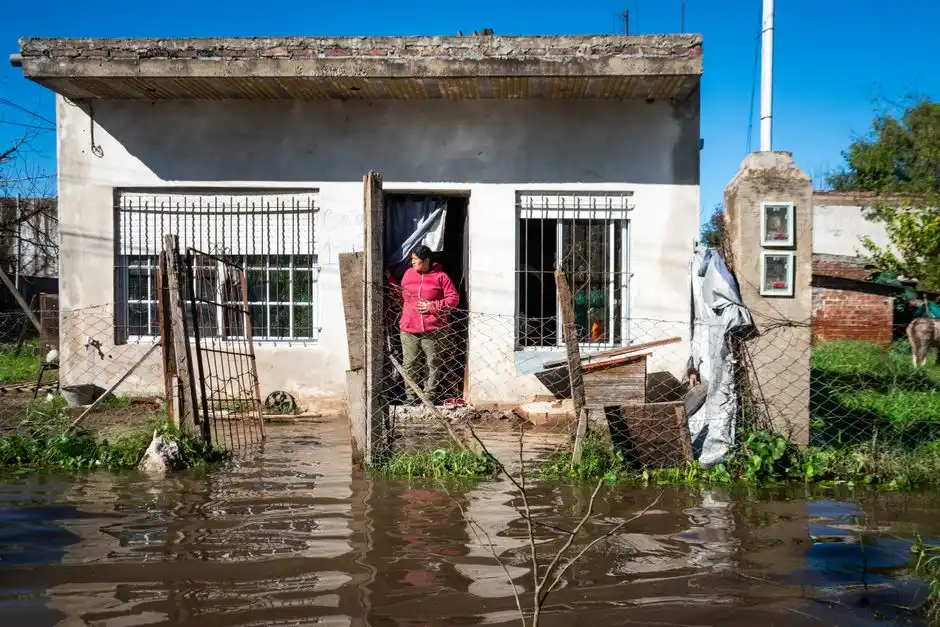
Water in a basement gets worse every hour. Here is what you get when you call our team instead of waiting it out.
Water Out in Hours
Our extraction units move 20 to 60 gallons per minute, so a typical 1,000-square-foot basement is pumped dry in three to five hours. We arrive with the truck loaded, not a clipboard and a promise to come back tomorrow.
Mold Stopped Early
Mold can colonize wet drywall in 24 to 48 hours. We apply an antimicrobial solution and set drying equipment the same day, which closes the window before spores take hold. That is the difference between a cleanup and a full mold remediation.
Insurance Paperwork Handled
We document moisture readings, photos, and affected square footage in Xactimate so your claim moves. Most homeowner policies cover sudden basement flooding cleanup Idaho, and our reports give the adjuster exactly what they need.
Drying Verified, Not Guessed
We do not pack up when the floor looks dry. Daily hygrometer and moisture meter readings confirm framing and concrete hit target levels, and you get the final numbers in writing. If it is still wet, the equipment stays.
Typical 2026 pricing for basement water removal in Idaho runs $500 to $2,500 for most homes, with larger or contaminated jobs reaching $3,500 or more. The biggest cost drivers are water depth, square footage, water category, and how many days drying equipment runs. We quote the full scope before we start, so you know the number. If your insurance covers the loss, we bill the carrier directly and document everything in Xactimate.
Typical Investment Range
$500 - $3,500 depending on scope
The cost of extracting and drying a basement is a fraction of what mold remediation and structural repair run. Handling it in the first 24 to 48 hours is what keeps the job small. We quote upfront, document for insurance, and do not add charges without telling you first.
What changes the price
Water Depth and Volume
An inch of water across 500 square feet is a few hours of extraction. Four inches across 1,200 square feet takes longer, uses more equipment, and adds disposal costs. Depth is the single biggest driver of labor time.
Water Category
Clean water from a supply line is the simplest job. Gray water from a washing machine or dishwasher needs antimicrobial treatment. Sewage backup is category 3 and requires PPE, disposal of porous materials, and full disinfection, which adds cost.
Square Footage Affected
Extraction and drying equipment are sized to the space. A 400-square-foot utility room needs one air mover and a small dehumidifier. A 1,500-square-foot finished basement needs six or more air movers and a desiccant unit.
Drying Duration
Most basements dry in two to four days. Saturated framing, dense materials like tile over concrete, or high ambient humidity can push drying to five or six days, which adds equipment rental and monitoring visits.
Material Removal and Disposal
Carpet, pad, and wet drywall usually have to come out. Disposal fees and the labor to cut and haul add to the bill. We document what was removed for your insurance claim.
Access and Setup
Basements with narrow stairs, no exterior access, or long hose runs take more time to set up. Rural properties outside Idaho Falls or McCall may also add a trip charge, which we quote upfront.
Google ★★★★★4.9
Called at 6 a.m. with water in the basement from a burst pipe. Crew arrived by 8, water was out by noon, and drying equipment ran for three days. They showed me the moisture readings every visit and sent a report my insurance accepted without questions.
BBB ★★★★★4.8
Sewage backup in our basement over a holiday weekend. They answered the phone, walked us through safety, and had a crew out the same day. Full disinfection, proper disposal, and clear communication throughout. Would call again without hesitation.
Yelp ★★★★★4.9
We are outside Blackfoot and figured nobody would come. They did, same day, with a full truck. Found the sump pump had failed, pumped the water, dried the space, and gave us a written plan for a backup pump. Fair price and no upsell.
Google ★★★★★5.0
Foundation leak had been seeping for a week and the carpet was ruined. They pulled it, dried the concrete, found the crack with a thermal camera, and sealed it. Three days from call to dry. Straight answers the whole way.
Our technicians hold IICRC WRT (Water Restoration Technician) and IICRC ASD (Applied Structural Drying) certifications, and several carry IICRC AMRT for mold work. We follow the IICRC S500 standard for water damage, which sets the drying goals and documentation we work to on every job. Crews are trained in EPA Lead-Safe practices for older homes and hold OSHA 10 and OSHA 30 cards for job-site safety. We work with Fiberlock and Benefect antimicrobials, Dri-Eaz and Phoenix Restoration Equipment drying gear, and Xactimate for insurance scoping. That combination is what lets us dry a basement to standard and prove it.
Our crews cover the entire state, from the Snake River Plain to the mountain valleys. Whether you are in a metro area or a rural community, the same equipment, certifications, and drying standards apply. Here is how we deliver basement water extraction Idaho homeowners can rely on across the regions we serve.
Frozen pipe calls spike here from December through February. We extract, dry, and coordinate plumbing repairs so the split line is fixed before drying finishes.
Shallow water tables and spring storms make sump pump failure our most common call. We pump, dry, and recommend battery backup systems to prevent repeat flooding.
Mountain snowmelt pushes water against sloped foundations. We handle walkout basement seepage, window well intrusion, and retaining wall drainage issues.
Rural properties here often lack municipal drainage. We bring portable generators and full extraction gear to handle storm-driven basement flooding.
Flash storms overwhelm older drainage systems. We extract fast, dry the structure, and give you a plan to redirect runoff away from the foundation.
Long driveways and power outages are common. Our crews stage equipment carefully and bring backup power so drying never stops mid-job.
Remote properties get the same response as in-town jobs. We extract standing water, dry the space, and document everything for your insurance claim.
Spring runoff and foundation seepage are the main issues here. We locate the entry point with thermal imaging and seal it after drying is complete.
Basements in this area see storm-driven flooding and older foundation cracks. We pump, dry, and treat with antimicrobials to stop mold before it starts.
Real answers to the questions we hear most often from local homeowners and property managers.
When basement water reaches drywall, insulation, or framing, restoration goes beyond extraction. We remove damaged material, dry the structure, and rebuild. It is the natural next step after Basement Water Removal in Idaho when water sat for more than a day.
View Water Damage RestorationBurst pipes at 2 a.m. and storm flooding on a holiday do not wait. Our emergency crews respond around the clock across Idaho with extraction equipment loaded. If water is rising and you cannot shut it off, call before you do anything else.
View Emergency Water RemovalExtraction is the first physical step of any basement water job. We use truck-mount and portable units to pull standing water from concrete, carpet, and pad, then measure what is left. Fast extraction is what keeps drying time short and mold risk low.
View Water ExtractionFlood water carries silt, bacteria, and debris that a shop vac cannot handle safely. We extract, disinfect, and dispose of contaminated material to code. If your basement took on outside water during a storm, this is the service you need.
View Flood Damage CleanupWater in a crawl space rots joists and feeds mold long before it reaches the basement floor. We extract standing water, dry the space with desiccant dehumidifiers, and install vapor barrier where needed. Many Idaho homes have both a wet crawl space and a wet basement.
View Crawl Space Water RemovalSewage in a basement is a category 3 contamination and needs more than pumping. We remove the water, dispose of affected porous materials, and treat surfaces with hospital-grade disinfectant. Do not enter a sewage-flooded basement without PPE.
View Sewage Backup CleanupCall (855) 343-0501 any hour of the day or night. We answer live, ask the right questions, and dispatch the closest crew to your address. Most Idaho emergency calls get a technician on site within 60 to 90 minutes. If you prefer, send us the details by email and we will call you back within 15 minutes.
Phone
(855) 343-0501Address
Idaho
Hours
Mon–Fri: 7AM – 7PM
Sat: 8AM – 4PM
Sun: Emergency Only
24/7 Emergency Available